
Water Leak Detection · Sterling Heights

Water Leak Detection in Sterling Heights, MI

A hidden leak can soak a wall stud for weeks before the first stain ever reaches your ceiling. We trace the water back to where it starts and show you the exact spot, so nobody opens drywall on a hunch.

Free Quote

Free Water Leak Detection quote.

We reply within 1 business hour. No spam, ever.

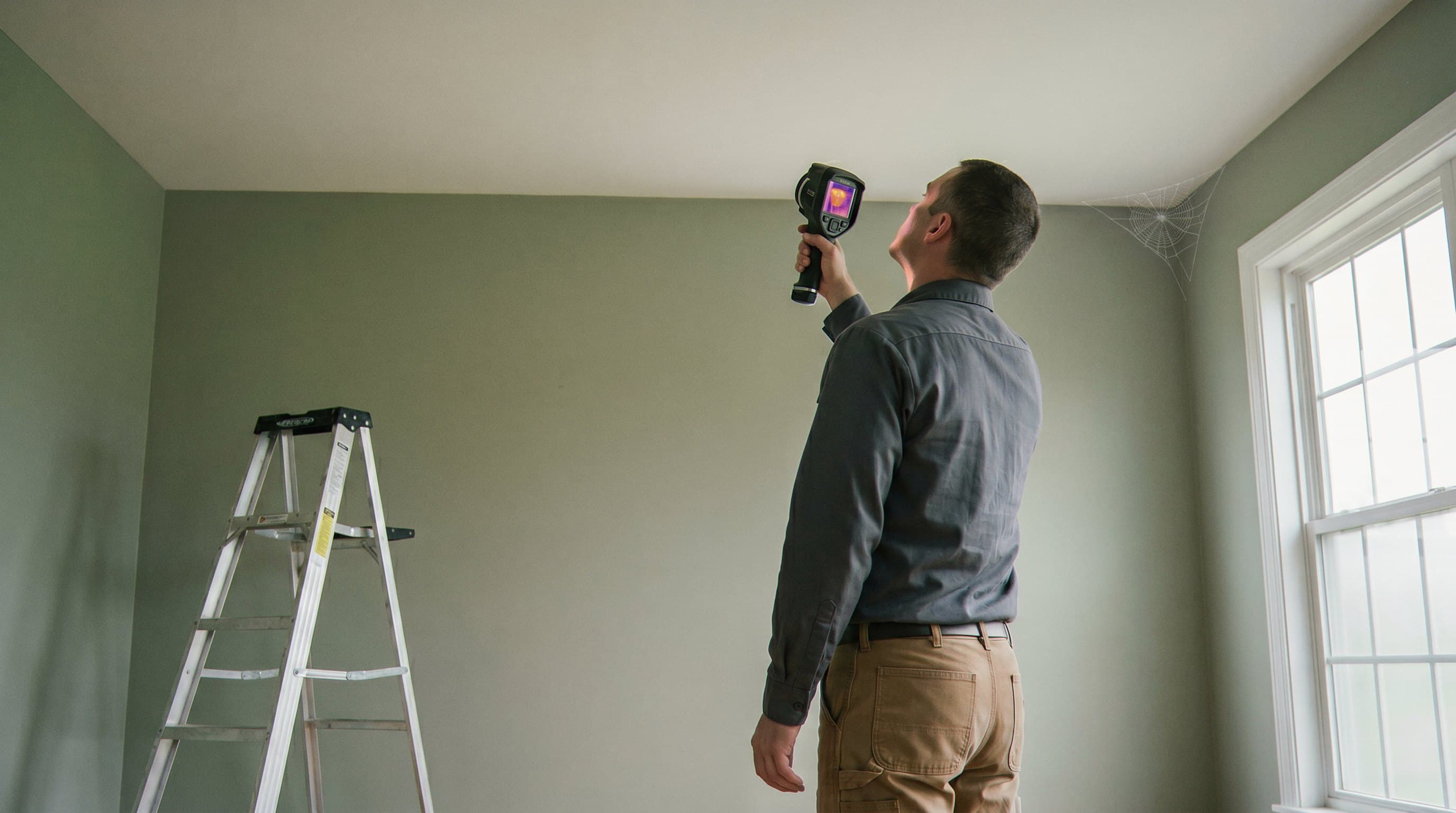
Thermal camera scanning for hidden water
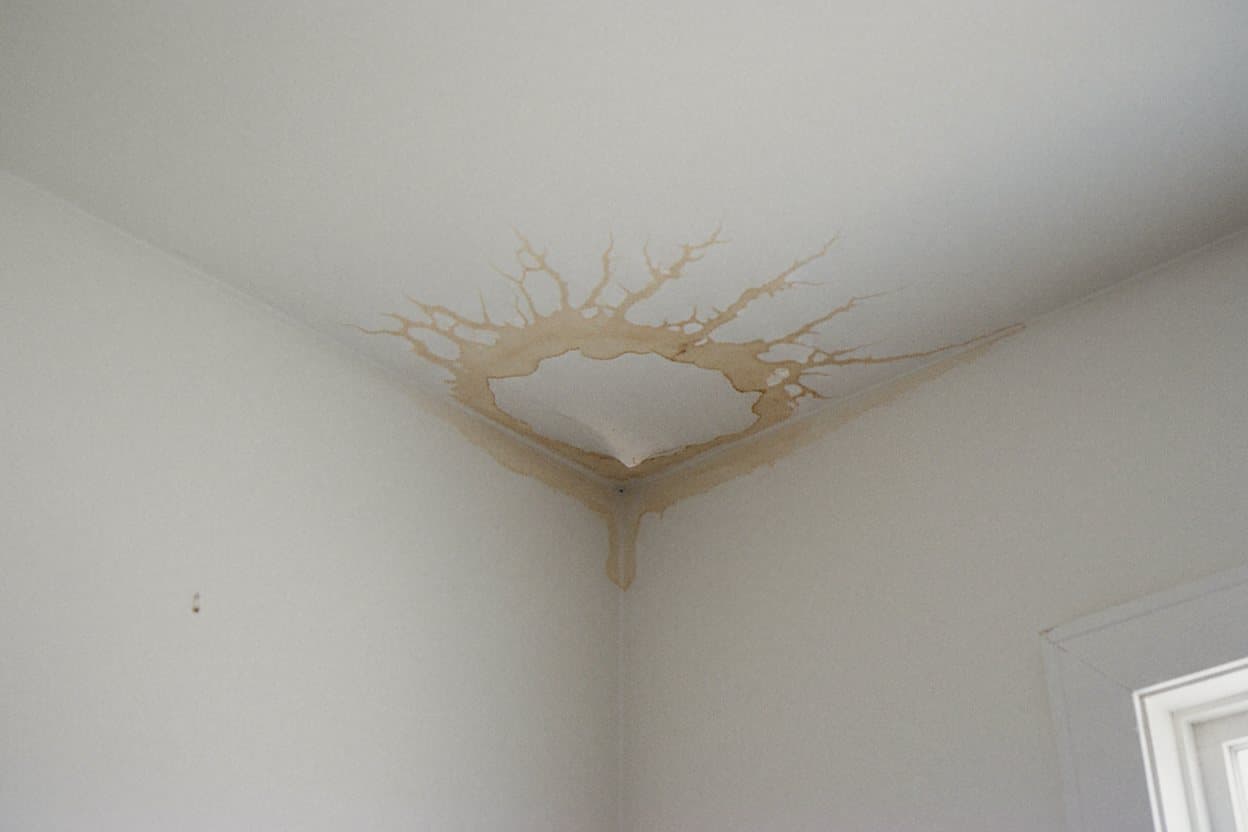
Moisture visible behind wall cavity
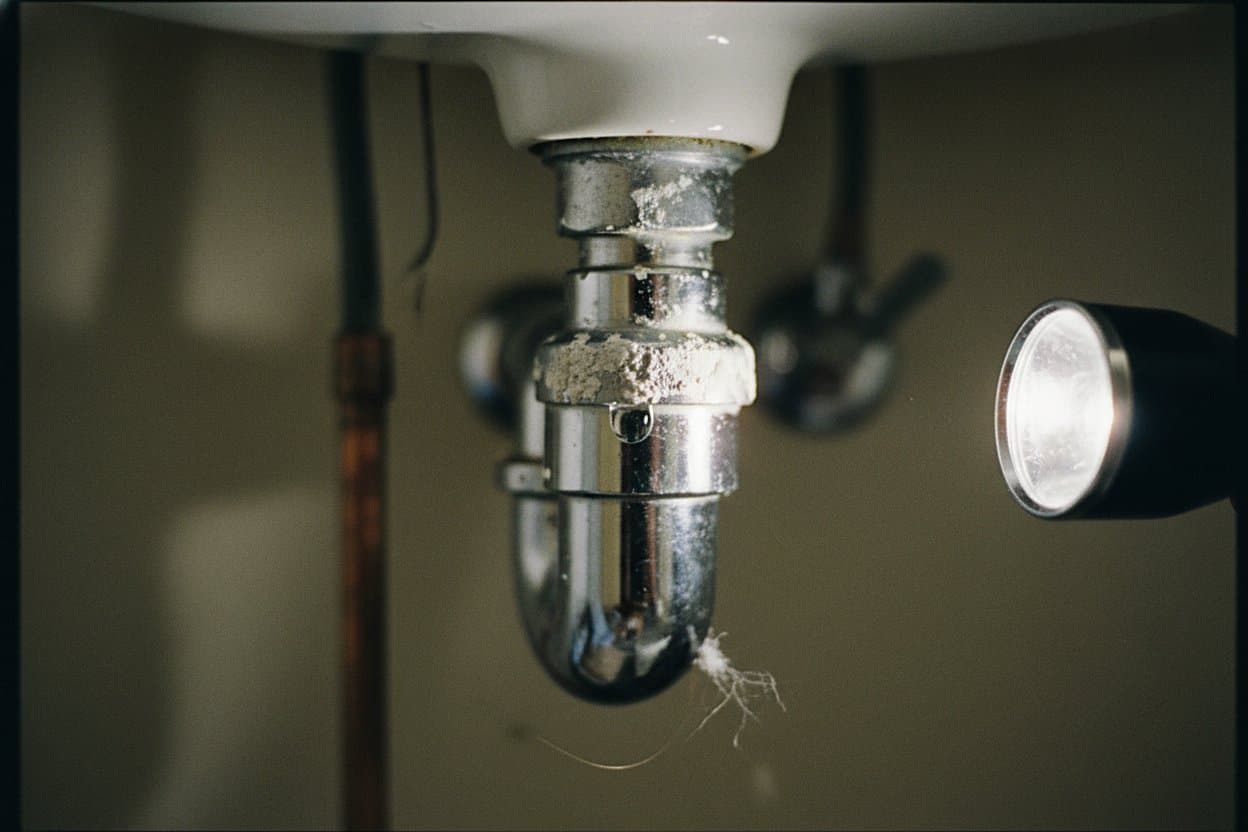
Meter reading moisture inside wood
What we do

We Find the Leak Before It Costs You a Wall

Most leaks in Sterling Heights start quiet. A pinhole in an old copper line. A supply valve under a sink that weeps a little more each month. A joint in the basement ceiling that drips onto a joist and never once touches the floor. By the time a brown ring shows on your drywall, the water has been moving for weeks and it has already picked a path along the framing. We come out, listen to what you have noticed, and work from there. We check the room above the stain, then the room below it, then the mechanical room and the lines that run between them. When we finish walking your house, you know what is wet, how far it went, and what keeps feeding it. Every water job we handle sits on our services page.

We follow water with moisture meters, thermal imaging, and acoustic listening gear. Nothing gets opened on a guess. A thermal camera reads the cool shadow that damp leaves behind plaster or drywall, and it sweeps a whole room in minutes. Acoustic gear picks up the faint hiss of a pressure line running under a basement slab or behind bathroom tile. Moisture meters do the rest. They tell us how far the water traveled through the wood and how deep it sank in. Some Sterling Heights homes hide the leak above a finished basement ceiling, and a camera spares you from pulling down every single panel to look. Others push it into the wall behind a bathroom that backs onto a bedroom closet. We narrow the search, mark the spot, and show you the reading that proves it. Then we tell you what the repair actually involves.

  • Pinpoint work that saves your walls from a search with a saw
  • Thermal and acoustic tools that read what your eyes cannot
  • Fast help when the meter creeps with every tap shut off
  • A clear written picture of where the water sits and how far it spread
  • Straight next steps, whether that means one fitting or a full dry out
We do not stop at the damp spot. We follow the water back to its source, because a fix that misses the source is only a slower leak.

Leak detection should never start with a sledgehammer, and it should never end with a shrug. We explain each reading while we take it, so you follow the trail with us instead of waiting in the kitchen for a verdict. If the water traces back to a split line or a failed fixture, we point at the spot and say plainly what it takes to correct. If it soaked into the subfloor or crept under a baseboard, we walk you through drying so nothing stays damp inside a wall cavity. Wet wood in a closed space feeds mold within a couple of days, and Michigan basements hold that damp longer than any other room in the house. You get the real story first. What happens next is your call, not ours.

If you hear water running with every faucet closed, catch a musty smell near a wall, or watch your bill climb for no reason you can name, call us. We will come out, find the leak in your Sterling Heights home, and show you exactly where it sits. Then we tell you what setting it right takes.
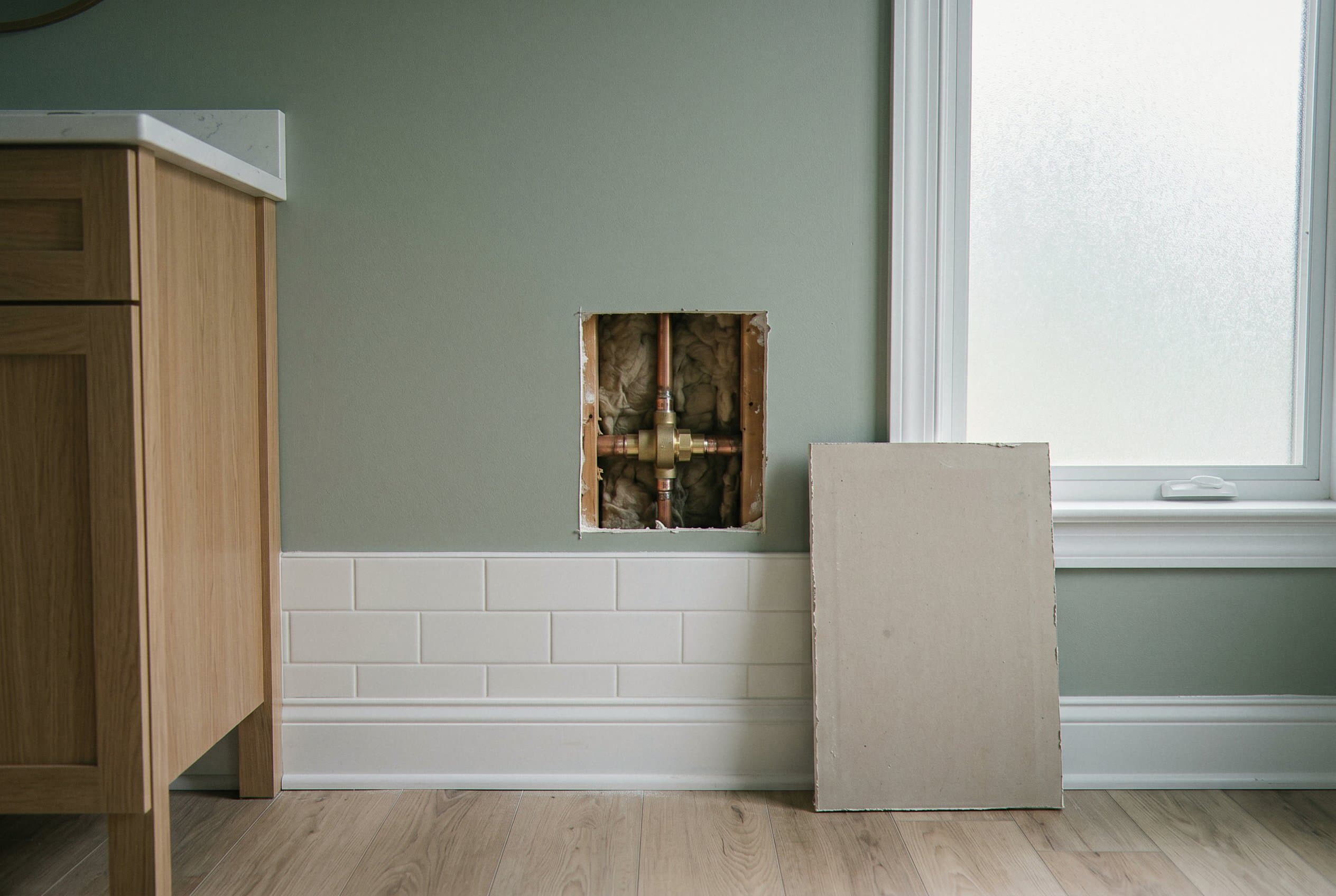
Materials

The Tools We Bring and What Each One Reads

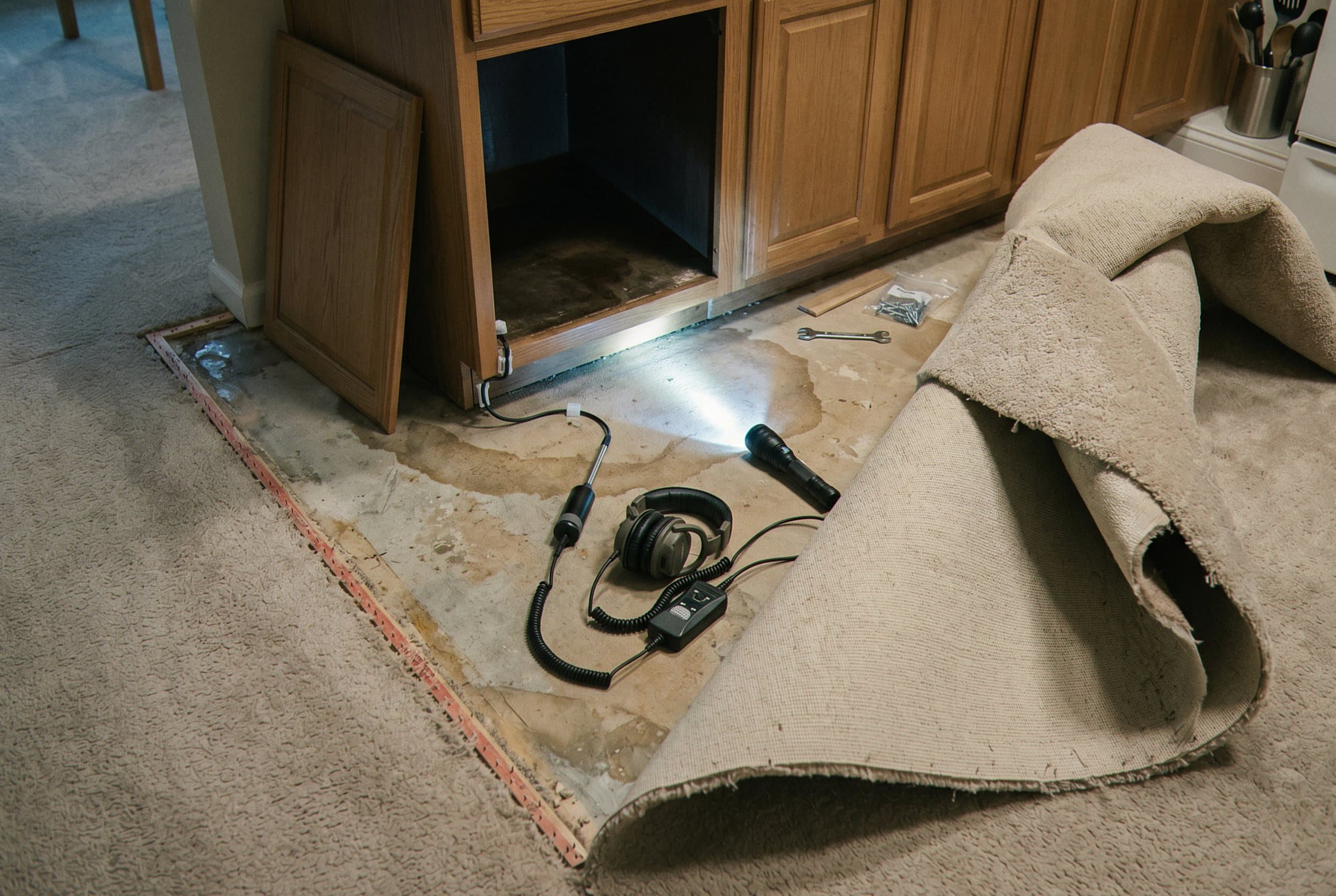
No single tool finds every leak, so we bring the whole set and let the house tell us which one matters. A thermal camera works best on a wall with a temperature difference behind it, which makes it strong on hot supply lines and weak on a slow drip in an unheated crawl space. Acoustic gear shines where pressure still sits in the line, since it hears the escape as a hiss. Moisture meters do the plain work of mapping. Pin meters read the water inside wood, and pinless meters sweep a finished surface without leaving a mark on it. We move between them as the readings narrow the field.

What we do not do is chase gadgets or sell you on machines you will never touch. The basics done well beat a fancy readout every time. We start with the story you tell us, confirm it with numbers, and open the smallest area we can once the numbers agree. If a leak sits under a basement slab, we mark a square instead of breaking up a room. If it runs behind a tub, we check the access panel before we go near the tile. You get a clear read on where the water is, how far it spread, and the honest next step, whether that is one small repair or a full dry out with equipment.

  • Thermal cameras that read damp behind drywall and plaster
  • Acoustic gear that hears a pressure line under concrete
  • Pin and pinless moisture meters that map the wet zone
  • Borescopes that look inside a wall through a very small hole
Thermal and acoustic detection tools
Leak source marked for repair
What about the alternatives?

Ways to Chase a Hidden Leak, Ranked Honestly

Most people try a few things on their own before they call anyone. Some of it helps. Some of it costs you a wall you did not need to lose. Here is how the common approaches stack up next to a full detection visit from our crew in Sterling Heights.

A full detection visit from our crew

We map the whole run with thermal, acoustic, and moisture tools, mark the source, then hand you the readings that show why we opened the one spot we opened.

Recommended

The water meter test at the street

A quick check that proves water is moving somewhere on your side of the line. It still cannot tell you which room or which pipe.

Acceptable

A store bought moisture meter

Handy for confirming that a wall is wet. It will not tell you which line failed, and it reads only where you touch it.

Acceptable

A plumber pulling fixtures one at a time

Fine when the leak sits at a visible fixture. Slow and costly once the water is inside a slab or riding along a joist.

Acceptable

Cutting drywall where the stain shows

Water runs along framing before it drops. The stain is almost always downhill from the leak rather than under it, so the hole misses.

Skip

Waiting to see whether the stain grows

Every day of waiting hands more wood over to rot and gives mold a longer head start inside a closed wall where nobody can see it.

Skip
How it goes

From quote to walk-on, fast.

01

Emergency call & dispatch

02

Inspect & extract

03

Dry & dehumidify

04

Clean, repair & restore

Before you book

What Sterling Heights Owners Ask Us First

You want a clear picture before anyone touches your house. These are the questions we hear most from owners around Sterling Heights and the nearby parts of Macomb County, answered plainly and without the runaround.

Do you have to cut into my walls to find it?
Usually not, and never as a first move. We read the wall from the outside with thermal and moisture tools until the picture narrows down to a small area. If we do need to look inside, a borescope goes through a hole about the size of a quarter. Cutting comes last, stays small, and only happens where the readings point.
My bill jumped but I see nothing wet. What now?
That is one of the most common calls we take. A leak under a basement slab or out in a buried service line can run for months without ever leaving a stain. We start at the meter to confirm that water moves with everything closed, then work inward with acoustic gear until the sound gets loud in one place.
Could this be a frozen pipe instead of a slow leak?
In a Michigan winter it can be either, and the split often shows itself during the thaw rather than the cold snap. Lines in a rim joist, an unheated garage wall, or a crawl space take the worst of it here. We check those runs first whenever a leak turns up in January or March.
How fast can you get started in Sterling Heights?
We keep the schedule loose for water calls, because a leak does not pause while you wait. When you reach us we give you a real arrival window instead of a vague promise. Sterling Heights, Utica, Shelby Township, and Warren are short drives for our crew, so a same day visit is often on the table.
Will you fix the leak once you find it?
We show you the source, the readings, and the full scope of what got wet. From there we handle the water side, which means drying the structure and putting back the material we had to remove. We also tell you plainly what the plumbing repair itself takes, so you are never left guessing about the next step.
Is a small leak really worth a service call?
A slow drip does more quiet damage than a burst line, because nobody rushes to stop it. Wet wood in a dark cavity starts growing mold in about two days and holds it for as long as the damp lasts. Finding a pinhole this week is a far smaller job than replacing a soaked wall and a stretch of floor next spring.
Aftercare

Simple Habits That Catch the Next Leak Early

You cannot see inside a wall, but you can watch the signals a leak sends long before it stains anything. Most of them cost nothing and take a minute. Read your meter with every fixture off and see whether the dial creeps. Walk the basement after a heavy Macomb County rain and check the low corners along the block wall. Feel the floor near the water heater and the washer, since the pans there catch the early drips. In a Michigan winter, open the cabinet doors under sinks on outside walls so warm air reaches the lines. Habits this small turn a wall replacement into a fitting replacement.

  • Read the water meter with every fixture closed and watch for movement
  • Check under sinks and behind the toilet for damp or a warped cabinet floor
  • Look at the ceiling below every upstairs bathroom once a season
  • Watch the water heater pan and the washer hoses for rust or seepage
  • Before a Michigan freeze, drain the outside spigots and open the sink cabinets on outside walls
  • Call us the week a musty smell shows up, not the month the stain finally does
Thermal camera scanning for hidden water
FAQ

Leak questions from Sterling Heights homeowners

How fast can you get to my Sterling Heights home?
Our line is open at any hour. After a big rain, every crew in Macomb County is out at the same time, so rather than promise a number of minutes we tell you when we are actually leaving, and talk you through shutting the water off in the meantime.
What should I do before you arrive?
Close the main if you can get to it without standing in water. Stay clear of the panel and anything plugged in near the floor. Photograph each room before things get moved, and pull what you can up off the wet carpet.
Do you deal with the insurance company?
We produce what the adjuster needs: moisture readings taken daily, photographs of every affected area, and a written scope of what was removed and what was dried. We speak with them directly. Coverage is decided by your carrier, and we do not speculate about it.
How long until the equipment comes out?
Three to five days on most jobs. The clay under a lot of this area keeps basements damp to begin with, and that slows things down, so lower levels sometimes need longer. Readings against the IICRC dry standard decide it, not the calendar.
Will there be mold?
The window is about 24 to 48 hours once material is wet. Get it dry inside that and mold usually never starts. Miss it by a week and the job changes character entirely.
Ready when you are

Water in your Sterling Heights home?

Call now or send the form. We answer fast and tell you exactly what happens next.

Get a free quoteCall (586) 275-5556
CallFree Quote